
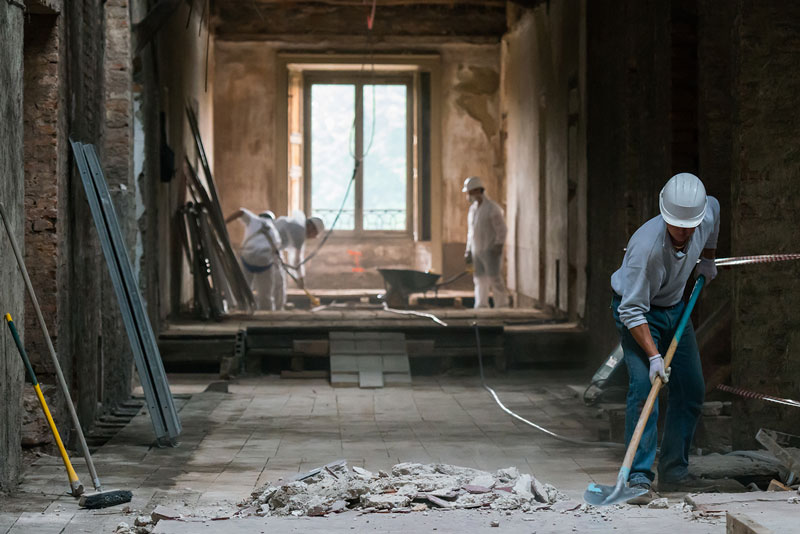
Renovating an older property is an exciting way to modernize your space, increase property value, and improve functionality. However, if your home or building was constructed before 1990, you need to be aware of the hidden hazards that may lie behind your walls, under your floors, and above your ceilings.
Before you start swinging a hammer, here’s what you need to know about asbestos, mold, lead-based paint, and how to plan a safe and compliant demolition or renovation project.
The Hidden Dangers in Older Properties
1. Asbestos
As discussed in our previous article, asbestos was widely used in construction materials until the 1980s. When disturbed by demolition or renovation activities, asbestos-containing materials can release microscopic fibers into the air, posing serious health risks to workers and occupants.
2. Lead-Based Paint
Lead-based paint was commonly used before 1978. When scraped, sanded, or disturbed during renovation, lead dust and particles can be inhaled or ingested, causing developmental issues, learning disabilities, and other health problems, especially in children and pregnant women.
3. Mold
If your property has had any history of water damage, mold may be present. Disturbing moldy materials during demolition can spread spores throughout the building, affecting indoor air quality and occupant health.
4. Other Hazards
Older buildings may also contain other hazardous materials, such as:
- Polychlorinated biphenyls (PCBs) in fluorescent lighting ballasts
- Mercury in thermostats and switches
- Refrigerants in older HVAC equipment
- Underground storage tanks
Step-by-Step Guide to a Safe Renovation
Step 1: Conduct a Pre-Renovation Assessment
Before you begin any work, have your property inspected by qualified professionals. ACI can help you:
- Identify asbestos-containing materials through visual inspection and sample analysis.
- Assess mold conditions and recommend remediation if needed.
- Provide recommendations for handling any hazardous materials found.
This assessment should be done before any design or demolition work begins. The results will inform your project timeline, budget, and safety plan.
Step 2: Develop an Abatement and Remediation Plan
If hazardous materials are found, develop a plan for their safe removal or containment. This plan should include:
- Scope of work: Exactly what will be removed or abated and where.
- Timeline: How long the abatement work will take and how it fits into the overall project schedule.
- Containment requirements: How the work area will be sealed to prevent contamination of the rest of the building.
- Disposal procedures: How waste will be handled, labeled, transported, and disposed of.
- Air monitoring: Whether post-abatement air sampling will be required.
Important: Asbestos and lead abatement must be performed by licensed professionals. Don’t attempt to do this work yourself.
Step 3: Choose the Right Approach for Your Project
Once hazardous materials are safely removed, you can proceed with your renovation. However, not all demolition is the same. ACI offers selective interior demolition services designed to protect what you want to keep while efficiently removing what you don’t. This approach involves:
- Targeted removal: We remove only designated walls, floors, ceilings, fixtures, and other specific elements.
- Preservation of surrounding areas: We protect adjacent structures and finishes from damage.
- Dust and debris containment: We use appropriate measures to control dust and debris during demolition.
- Coordination with your project team: We work alongside your contractors, architects, and designers to align on sequencing and scheduling.
Step 4: Plan for Occupant Protection
During renovation and demolition, it’s important to protect building occupants—whether residents, employees, or customers. Consider the following:
- Relocation: In some cases, it may be advisable to temporarily relocate occupants during abatement and demolition work.
- Isolation: Seal off work areas from occupied spaces using plastic sheeting and negative air pressure systems.
- Clear communication: Keep occupants informed about what to expect, including timelines, potential noise, and access restrictions.
- Safety protocols: Ensure that all workers follow proper safety procedures and that the work site is secure.
Step 5: Manage the Timeline and Budget
Renovation projects are often subject to unexpected issues. Hidden water damage, structural deficiencies, and hazardous materials can add time and cost. Build contingencies into your schedule and budget to accommodate these unknowns.
At ACI, we help our clients navigate these challenges with clear communication, realistic timelines, and transparent pricing. We work with you to minimize disruptions and keep your project on track.
Common Questions About Renovation and Demolition
Q: Do I need to test for asbestos before starting my renovation?
A: Yes. If your property was built before 1990, federal and state regulations require that you have suspect materials tested before any demolition or renovation work begins. Failure to do so can result in fines and liability.
Q: Can I stay in my home during asbestos removal or demolition?
A: It depends on the scope and location of the work. For small, isolated projects, you may be able to remain in the property, but for larger or more extensive work, temporary relocation is often recommended. We’ll discuss options during the planning phase.
Q: How do I choose the right contractor for abatement and demolition?
A: Look for contractors who are licensed, insured, and have specific experience with asbestos abatement and selective demolition. Ask for references and verify credentials. ACI has been serving the region since 1986 with a proven track record.
Q: What happens to the asbestos waste after it’s removed?
A: Asbestos waste must be wetted, double-bagged in specially labeled containers, and transported to approved disposal facilities using licensed haulers. ACI handles all disposal logistics and provides documentation for your records.
Why Choose ACI for Your Renovation Project?
With over 40 years of experience, ACI is a trusted partner for property owners undertaking renovations and demolitions in Harrisburg, Central Pennsylvania, Virginia, and Maryland. Here’s why clients choose us:
- Comprehensive services: We offer asbestos removal, mold remediation, and selective demolition—all in one place.
- Experienced team: Our crew is trained, licensed, and committed to safety and quality.
- Clear communication: We keep you informed at every stage, from initial evaluation to final walkthrough.
- Compliance: We handle all permits, notifications, and documentation to ensure full regulatory compliance.
- Responsive support: We understand that renovation projects can be stressful. We’re here to make it easier.
Final Thoughts
A well-planned renovation is a safe renovation. Don’t cut corners when it comes to hazardous materials—it’s simply not worth the risk. Taking the time to assess your property, develop a plan, and work with qualified professionals will ensure your project goes smoothly and safely.
Whether you’re planning a full remodel, a commercial expansion, or a selective demolition project, ACI is here to help. Contact us today to discuss your project and schedule a free evaluation.
Planning a renovation or demolition? Request your free evaluation today or call us at (717) 608-1739.